
Haywood County Arrest Records and Charges
Haywood County arrest records are law-enforcement records tied to the arrest and booking event. The Haywood County Sheriff's Office handles sheriff records at 1620 Brown Avenue, Waynesville, and the detention page says inmate inquiries through the automated line include charges, bond amounts, and residential information. No official public web jail roster was located in the research, so arrest and booking checks rely on the detention phone channel, the Sheriff's Office, records requests, and court records once charges are filed.
The court charge record begins when a criminal accusation enters the court file. That record can list the offense name, statute, class, warrant or citation number, bond, initial appearance, first court date, prosecutor action, and charge status. The full case file, including plea, disposition, and sentence, belongs in Haywood County criminal court records. The custody and jail-status side belongs with inmate records.
The official Haywood Sheriff's public-records request form is one channel for records prepared or maintained by the Sheriff's Office. The image below comes from the Haywood County Sheriff's Office public records request page.
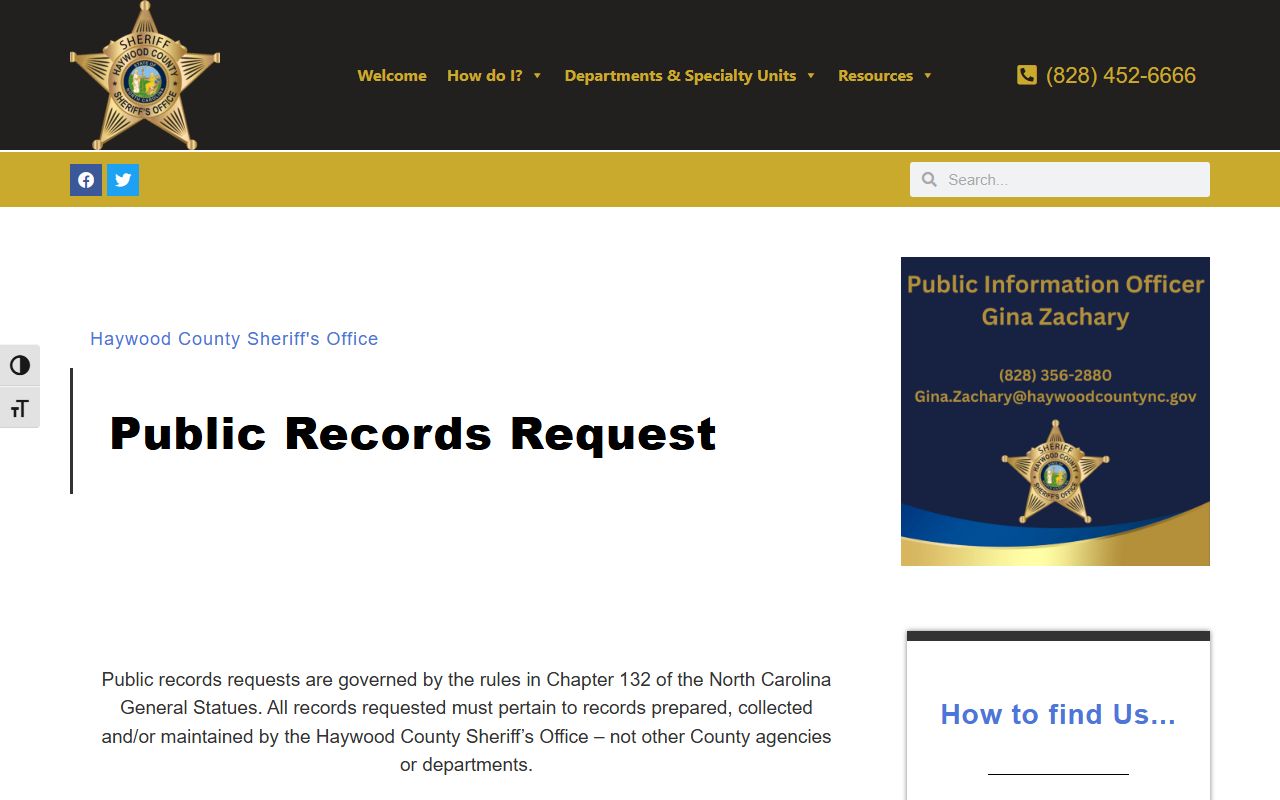
That request path is useful for sheriff-maintained records, but active investigations and some law-enforcement records may be limited by North Carolina law.
Find Haywood Arrest Records
Use a split search path. For custody status after an arrest, call the Haywood County Detention Center automated inmate line at (828) 452-6670 and select option 1. The detention page says information updates every 15 minutes and includes charges, bond amounts, and residential information. For formal court charges after arrest, search the NC eCourts Portal or contact the Clerk of Superior Court at (828) 454-6501.
If the arrest was made by a municipal police agency in Waynesville, Canton, Clyde, or Maggie Valley, the court case still routes into the North Carolina General Court of Justice. The official court file is not a separate municipal court archive. For sheriff records, the Sheriff's Office public-records request form asks for requestor details, a description of records, and a delivery method of email, pickup at HCSO, or mail.
- Use the detention automated line for current custody, charges, bond amount, and housing-related information.
- Open NC eCourts Portal for the case number, court date, charge list, and charge status once the matter is filed.
- Select Haywood County in Portal filters to avoid mixing similarly named defendants from other counties.
- Check each charge separately because one arrest can produce multiple counts, amendments, reductions, or dismissals.
- Use the Sheriff's records request form for sheriff-maintained records, while expecting limits for active investigations.
The county staff directory confirms the Sheriff's Office, Sheriff Bill Wilke, and Chief Deputy Matthew Trantham. The image below comes from the Haywood County Sheriff's Office directory listing.
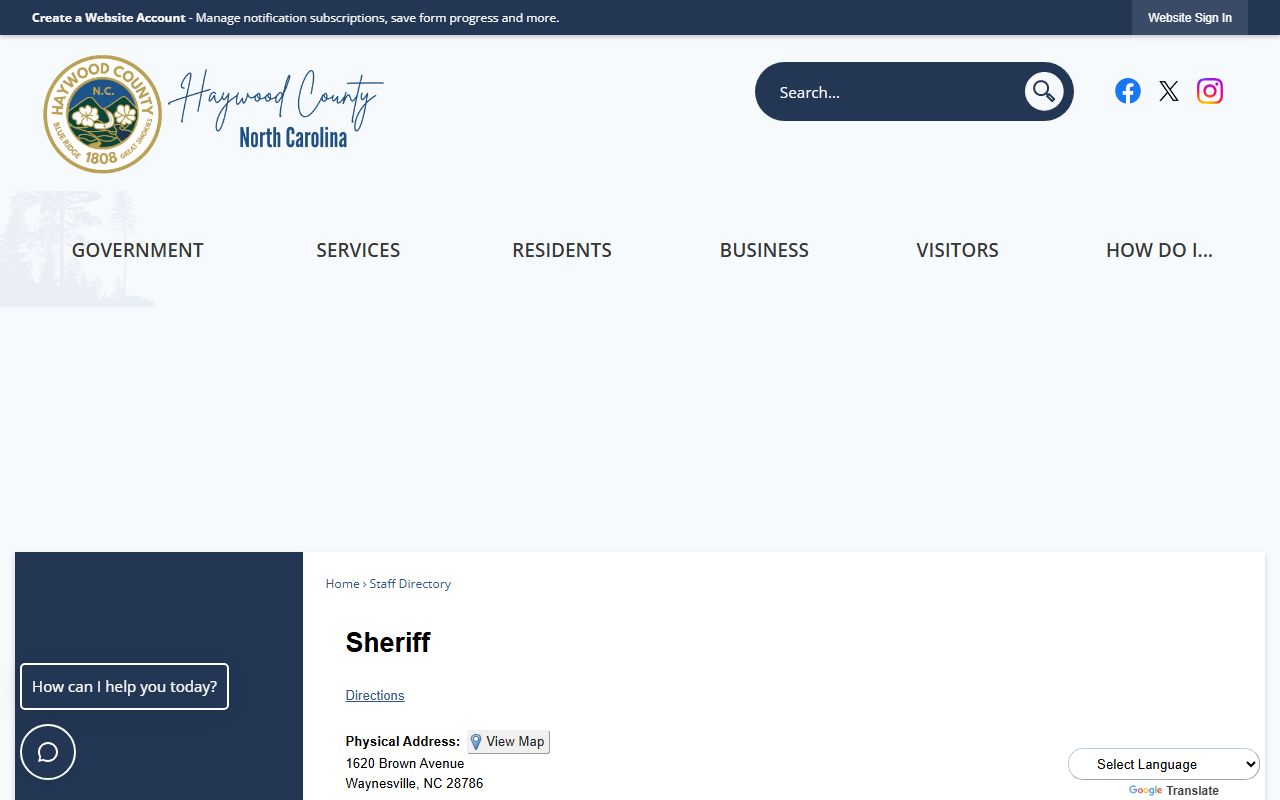
Use that county directory for official sheriff contact context, but use the detention line and Portal for arrest-to-charge record checks.
Charges After Arrest in Haywood
After an arrest, charges can enter the court system through criminal process, a citation, a magistrate action, a prosecutor-filed accusation, or a grand jury indictment. North Carolina's criminal process statute is relevant because it covers warrants, orders for arrest, criminal summonses, and related charging papers. In practice, the charge record should be read as the formal court-facing accusation, not as proof of guilt.
| Complaint or process | Information or prosecutor filing | Indictment | |
|---|---|---|---|
| Filed by | Law enforcement, magistrate process, or charging officer path. | Prosecutor action or formal accusation path where used. | Grand jury charging document, most relevant to felony prosecution. |
| Common use | Arrest warrants, criminal summonses, citations, and early criminal filings. | Prosecutor-reviewed charges and amendments. | Serious felony cases and Superior Court prosecution. |
| Record effect | Starts or supports the court charge record. | Clarifies what the State pursues. | Moves the charge into indictment-based prosecution. |
The Waynesville Police Department app is relevant to town-police information because it advertises Submit a Tip, Sex Offenders, Agency Programs, Most Wanted, and social posts. The image below comes from the Waynesville Police Department App Store listing.
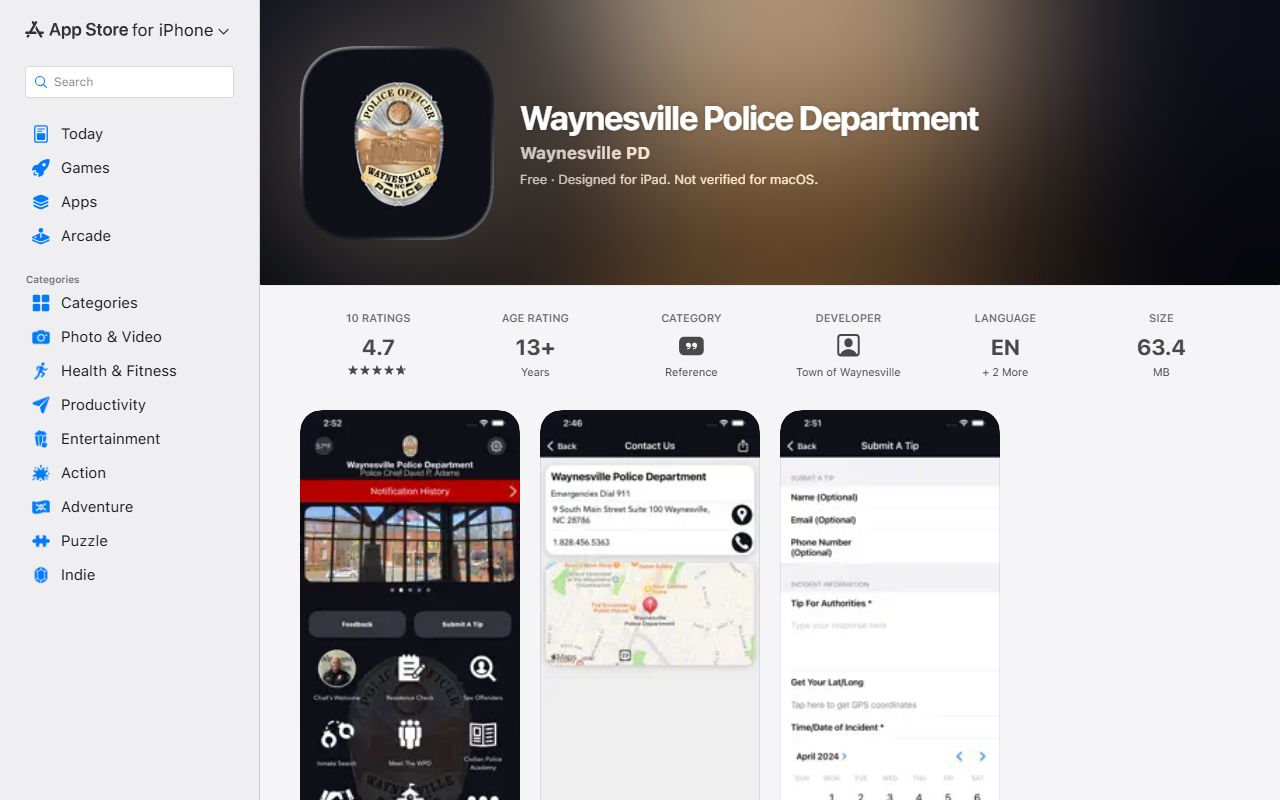
The app is not a county sheriff jail roster and was not confirmed as a full arrest-record database.
Haywood Court Charge Status
A charge can change as the case moves through District Court or Superior Court. Prosecutors may pursue, amend, reduce, or dismiss charges. Courts may enter plea results, trial verdicts, probationary outcomes, or dismissals. A charge row in Portal should be checked with the docket events and disposition entries because the charge name alone does not tell the full case result.
| Status | What It Means |
|---|---|
| Pending | The charge is still open or awaiting a later court event. |
| Amended / reduced | The original charge was changed, often after prosecutor review, plea discussion, or court action. |
| Dismissed | The court record reflects that the charge was not pursued to conviction or was otherwise dismissed. |
| Nolle prosequi | The prosecutor does not proceed on that charge, when that term appears in the record. |
| Disposed | The charge has an entered outcome, which may or may not be a conviction. |
Bond also belongs in the arrest-to-charge path. After arrest, a person is taken before a judge or magistrate who sets conditions of release. A secured bond may be satisfied by full cash bond paid to the Clerk of Superior Court, a qualifying Haywood County property bond, or a bondsman.
G.S. 15A-534 addresses pretrial release conditions. The image below shows the statute source used for Haywood County arrest records and court charges.
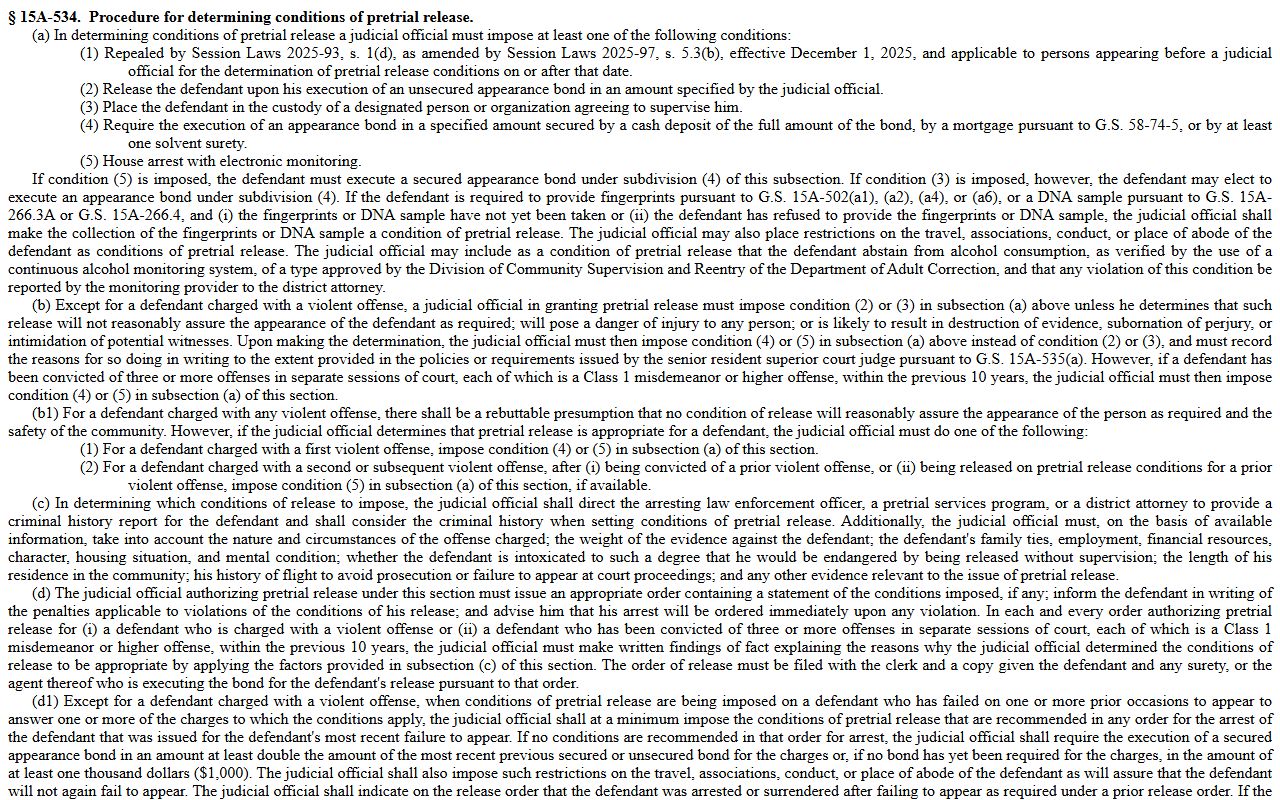
Bond entries should be read with current detention or clerk information because amounts and conditions can change after a hearing.
Haywood Charges vs Convictions
An arrest or charge is not a conviction. Haywood County arrest records may show that a person was booked, and court charge records may show accusations filed in court. A conviction requires a guilty plea, verdict, or court finding. Dismissed, reduced, amended, or pending charges should not be read as final guilt.
| Charge | Conviction | |
|---|---|---|
| Stage | Accusation after arrest, citation, warrant, summons, or prosecutor action. | Final result after plea, verdict, or other court finding. |
| Proof | Based on probable cause or the charging process. | Based on a legal finding or guilty plea. |
| Record meaning | Tracks what the State alleges and how the charge is moving. | Tracks the final criminal outcome and sentence. |
Haywood Charge Codes and Levels
Charge records can identify offense names, statutes, case numbers, citation numbers, warrant numbers, class or level, bond, court dates, and the agency involved. Haywood County felony charges are handled in Superior Court, while misdemeanors and infractions commonly start in District Court. One arrest can create several separate charge rows, and each row can have a separate status or outcome.
Prosecutorial District 43 handles Haywood County prosecutions. District Attorney Ashley Hornsby Welch represents the district that includes Haywood County, and the NC Courts contact directory lists the District Attorney phone as (828) 454-6510. The prosecutor's role is important because an arresting agency may start the case, but the State decides what to pursue in court.
Restricted Haywood Arrest Records
Law-enforcement records have limits that differ from court case files. G.S. 132-1.4 governs criminal investigation and intelligence records, and the Haywood Sheriff's request page warns that criminal investigation records and agency recordings may have special rules. Juvenile records, sealed records, expunged records, protected personal data, and active investigative material may not be released through ordinary search paths.
| Sealed | Expunged | |
|---|---|---|
| Public view | Hidden from ordinary public access by law or order. | Removed from ordinary public-facing records if the court grants relief. |
| Agency access | Limited access may remain for authorized purposes. | Access depends on the expunction order and governing law. |
| Eligibility | Depends on case type and order. | Depends on charge, disposition, prior record, waiting period, and statute. |
The Chapter 132 statute index is shown in the image from the North Carolina General Statutes Chapter 132 page.
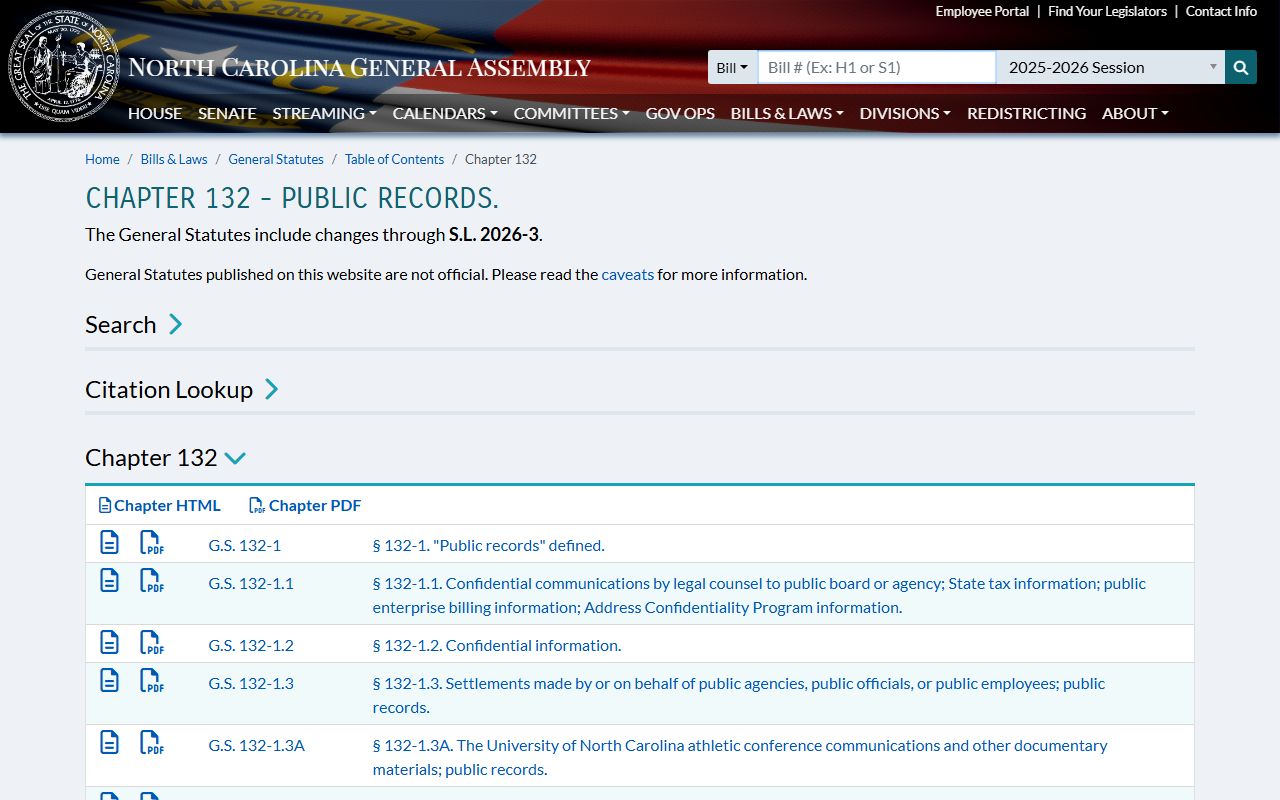
Use the statute and the custodian's response to understand why a sheriff record may be withheld even when a court event is visible.
State and Federal Charge Limits
State custody and supervision records do not come from the Haywood County jail roster or clerk case file. The NC Department of Adult Correction search covers state prisoners, probationers, parolees, and historical offender information back to 1972. Federal criminal cases, federal warrants, federal supervised release, and federal custody are outside the Haywood County Clerk of Superior Court file.
Bankruptcy is not an arrest or criminal charge record, but it is a useful boundary for federal records. The image below comes from the U.S. Bankruptcy Court for the Western District of North Carolina.
Use that federal court only for bankruptcy matters. Haywood County arrest records and criminal charges remain with law enforcement, Portal, and the state trial court system.
Important: The operator is not a consumer reporting agency, and these records cannot be used for FCRA-regulated decisions.